A damaged, weakened or heavily restored tooth can affect your ability to chew comfortably and feel confident about your smile. A dental crown, often called a tooth cap, can help restore a tooth’s shape, strength and appearance when a dentist determines that a crown is appropriate.
However, choosing a dental crown involves more than comparing prices. The right option depends on the condition of the tooth, its position in your mouth, your bite, the appearance you want and your budget. In this guide, we explain the main types of dental crowns available in India, the factors that influence their cost, and what to consider when looking for dental crowns in Calicut (Kozhikode).
Read more about dental crowns and bridges at PAL Dental Clinic to learn about tooth restoration options.
What Is a Dental Crown?
A dental crown is a custom-made restoration that covers the visible part of a tooth. It can restore shape and function and protect weakened tooth structure when a filling alone may not provide enough support.
Depending on your dental condition, a dentist may recommend a crown for a tooth that has been significantly damaged by decay, cracked or weakened, restored with a large filling, or treated with root canal therapy. A crown may also be placed on a dental implant as its visible replacement tooth. A crown is not necessary for every damaged tooth, so your dentist should assess the remaining tooth structure, gum health and bite before recommending one.
Types of Dental Crowns Available in India
Dental crowns are made from different materials, each with its own characteristics, advantages and limitations. Your dentist can help select an option based on the tooth’s location, chewing forces, appearance requirements and clinical condition.
1. Zirconia Crowns
Zirconia crowns are made from a strong ceramic material known for its resistance to chewing forces. They are tooth-coloured and can be designed to blend with surrounding teeth.
Potential advantages:
- High strength and resistance to wear.
- Tooth-coloured appearance and metal-free construction.
- May be suitable for selected front and back tooth restorations.
Things to consider: The final appearance depends on the type of zirconia, crown design, shade selection and laboratory work. Your dentist will also assess your bite and whether you grind or clench your teeth.
2. Porcelain-Fused-to-Metal (PFM) Crowns
Porcelain-fused-to-metal crowns have a metal framework covered with tooth-coloured porcelain. This construction combines the support of metal with a more natural-looking outer surface.
Potential advantages:
- A well-established restoration option.
- A strong internal framework with a tooth-coloured outer layer.
- May suit selected cases where function and appearance both matter.
Things to consider: The porcelain may chip in some circumstances, and a dark line near the gum can sometimes become visible as the gums change over time. The appearance may differ from certain all-ceramic restorations.
3. All-Ceramic Crowns
All-ceramic crowns are made from ceramic materials without a metal framework. They can provide an aesthetic restoration, particularly where the tooth is visible when smiling.
Potential advantages:
- Natural-looking tooth colour.
- No metal framework.
- Different ceramic options for different clinical needs.
Things to consider: Ceramic materials differ in strength and translucency. The best choice depends on the tooth’s location, chewing forces and restoration design.
4. Metal Crowns
Metal crowns are made from dental alloys. Their appearance is metallic rather than tooth-coloured, so they are generally considered when visibility is less important.
Potential advantages: They can be strong and wear-resistant, and may be appropriate for selected back teeth. Things to consider: Their metallic appearance may not suit patients who want a natural-looking restoration. Suitability also depends on the alloy and individual clinical circumstances.
5. Temporary Crowns
A temporary crown is a short-term restoration that may be placed while a permanent crown is being fabricated or before final treatment is completed. It helps cover and protect the prepared tooth during this period, but it is not generally intended to provide the same long-term performance as a definitive restoration. Follow your dentist’s instructions about eating, cleaning and what to do if the temporary crown loosens or comes off.
Dental Crown Cost in India
The cost of a dental crown in India varies according to the material, dental laboratory, complexity of the case, clinic location and treatment protocol. There is no single price that applies to every patient or clinic. The table below compares common cost considerations; it is not a confirmed price list for PAL Dental Clinic.
| Crown type | What can influence the cost |
|---|---|
| Metal crown | Alloy used, laboratory charges and case complexity |
| Porcelain-fused-to-metal (PFM) | Framework material, porcelain work and laboratory quality |
| All-ceramic crown | Ceramic system, aesthetic requirements and fabrication method |
| Zirconia crown | Zirconia type, laboratory process, shade requirements and case complexity |
| Temporary crown | Material, fabrication method and whether it is included in the treatment plan |
If you are comparing dental crown cost in Calicut, ask your dentist for a written treatment plan that identifies the proposed crown material and any additional procedures. Contact PAL Dental Clinic to ask about available crown options and the current cost for your individual case.
What Factors Affect Dental Crown Cost?
1. Crown material
Different materials involve different manufacturing processes and clinical characteristics. Zirconia, PFM and other ceramic crowns may therefore have different prices.
2. Tooth position
A front tooth may require detailed shade matching and aesthetic planning. A back tooth may need a design that manages substantial chewing forces. These requirements can affect the choice of material and laboratory work.
3. Laboratory and fabrication method
The quality of fabrication and the process used to create the crown can influence the final cost. Some restorations are made using digital scanning and computer-aided design and manufacturing, depending on the clinic’s workflow.
4. Condition of the tooth
A tooth that has lost substantial structure may need additional treatment before a crown can be placed. Your dentist may recommend a core build-up or another procedure if clinically necessary.
5. Root canal treatment
If the tooth has an infected or damaged pulp, root canal treatment may be needed before its final restoration. Not every crown requires a root canal, and not every root canal-treated tooth automatically requires the same type of crown. The decision depends on the tooth and how much structure remains. Learn more about root canal treatment in Calicut.
6. Follow-up and additional services
Diagnostic imaging, temporary restorations, adjustments and follow-up appointments may affect the overall treatment estimate. Ask which services are included in the quoted price.
Which Dental Crown Is Best for You?
There is no single crown material that is best for every tooth. Your dentist will consider both function and appearance before recommending an option.
- For front teeth: An all-ceramic or suitable zirconia crown may be considered when a natural-looking appearance is important.
- For back teeth: Zirconia, PFM or another appropriate material may be considered based on bite forces and remaining tooth structure.
- For patients seeking a metal-free option: Ceramic and zirconia restorations may be worth discussing.
- For patients comparing budgets: Ask about the total cost, expected benefits, limitations and maintenance requirements of each suitable option.
Do not choose a crown based on material name or price alone. A well-planned restoration needs an appropriate fit, a balanced bite, healthy surrounding gums and regular maintenance.
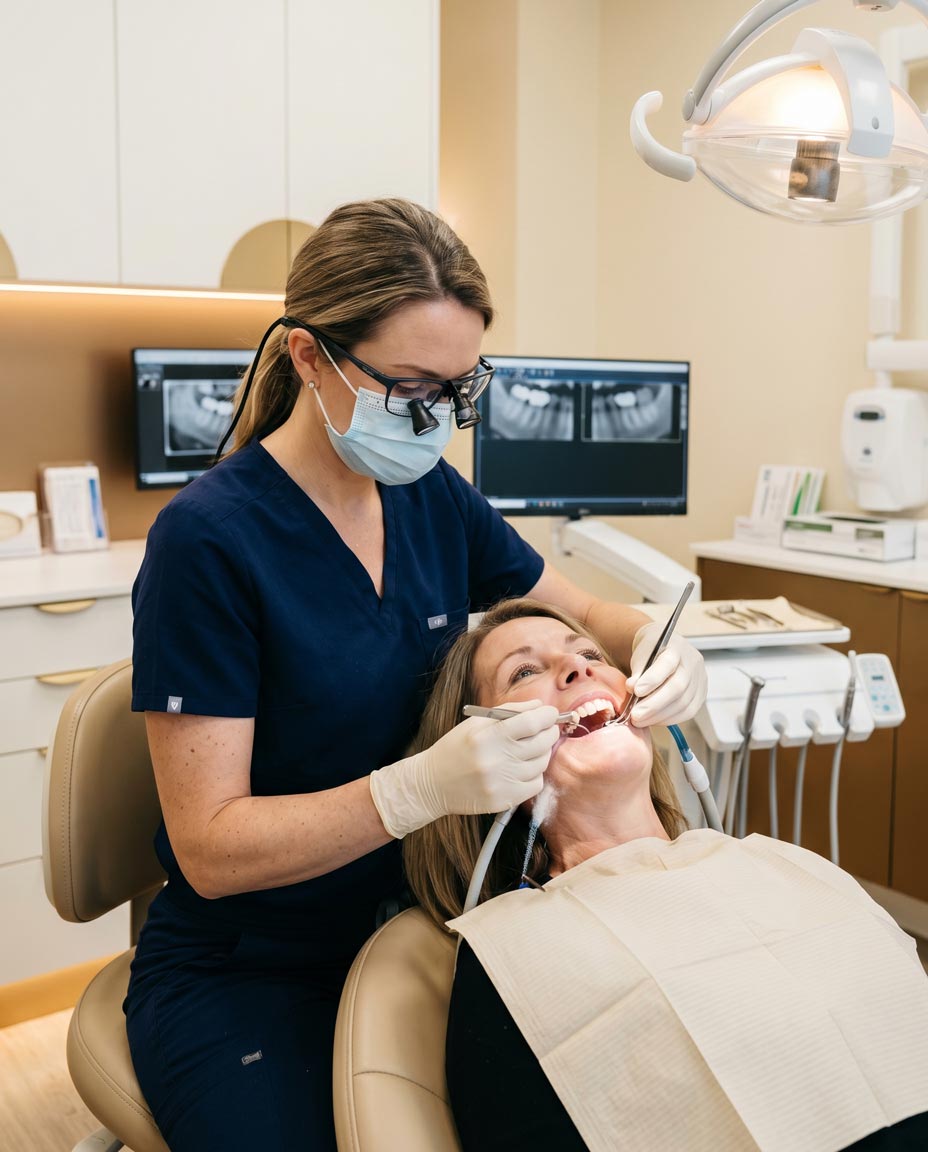
Dental Crown Treatment: What Happens During the Procedure?
Step 1: Dental examination
Your dentist examines the tooth and surrounding gums. X-rays or other diagnostic records may be used when indicated.
Step 2: Treatment planning
The dentist discusses the available restoration options, crown material, expected costs and any preparatory treatment.
Step 3: Tooth preparation
If a crown is appropriate, the tooth is carefully shaped to create space for the restoration. Local anaesthesia is commonly used to help manage discomfort during preparation.
Step 4: Impression or digital scan
An impression or digital scan records the prepared tooth and surrounding structures so the crown can be fabricated to fit.
Step 5: Temporary protection
A temporary crown may be placed while the permanent restoration is being made, depending on the treatment plan.
Step 6: Crown fitting
The dentist checks the fit, appearance and bite before securing the final crown. Adjustments may be made to improve comfort and function.
How Long Do Dental Crowns Last?
The lifespan of a dental crown varies. It depends on the material, accuracy of the fit, your bite, oral hygiene, gum health and habits such as teeth grinding or biting hard objects. To help maintain your crown:
- Brush twice daily with fluoride toothpaste.
- Clean between your teeth every day.
- Avoid using your teeth to open packages or bite hard objects.
- Wear a dentist-recommended night guard if you grind your teeth.
- Attend dental check-ups as advised.
- Contact your dentist if the crown feels loose, cracks or causes persistent discomfort.
A crown can still develop problems, including wear, damage or decay around its edges. Regular review helps your dentist identify concerns early.
Dental Crown vs Dental Veneer: What Is the Difference?
Crowns and veneers are different types of restorations. A crown usually covers the visible tooth all around and may be used when broader protection or reconstruction is needed. A veneer generally covers the front surface and is often considered for selected cosmetic concerns.
| Feature | Dental crown | Dental veneer |
|---|---|---|
| Main purpose | Restores and protects a tooth that needs broader coverage | Improves the front surface appearance in suitable cases |
| Coverage | Usually covers the visible tooth all around | Usually covers the front surface |
| Typical considerations | Tooth strength, structure and function | Colour, shape and selected cosmetic concerns |
Neither treatment is automatically better than the other. Your dentist can explain which option is appropriate for your tooth. Explore dental veneers in Calicut if you are also considering cosmetic improvements to your smile.
Why Consider PAL Dental Clinic for Dental Crowns in Calicut?
PAL Dental Clinic Root Canal & Laser Dentistry is located in West Hill, Kozhikode. Its published crown and bridge service information lists ceramic, zirconia and porcelain-fused-to-metal (PFM) crown options, along with personalised restoration planning.
When choosing a dental clinic for a crown, ask about the material recommended for your tooth and why, how the crown’s fit and bite will be checked, what the treatment estimate includes, and what care and follow-up will be required after placement. Visit the clinic’s dental crowns and bridges service page or contact PAL Dental Clinic to discuss an appointment.
Frequently Asked Questions About Dental Crowns
What is the best type of dental crown?
The best option depends on the tooth’s location, remaining structure, bite, aesthetic requirements and budget. Zirconia, PFM and all-ceramic crowns have different advantages and limitations. A dentist can recommend a material after examining your tooth.
How much does a dental crown cost in India?
Dental crown prices vary by material, location, laboratory and the complexity of treatment. Additional procedures may increase the overall cost. Request a current, itemised estimate from your dental clinic rather than relying on a general online price.
Is a zirconia crown better than a PFM crown?
Not in every situation. Zirconia is a tooth-coloured ceramic, while PFM combines a metal framework with porcelain. The right choice depends on clinical requirements, appearance, bite forces and cost.
Is getting a dental crown painful?
Local anaesthesia is commonly used during tooth preparation to manage pain. Some people experience temporary sensitivity or gum tenderness afterwards. Contact your dentist if pain persists, worsens or the bite feels uneven.
Do I always need a crown after root canal treatment?
Not always. The need for a crown depends on the tooth’s position, the amount of remaining structure and the forces placed on it. Your dentist should explain the reasons for the proposed restoration.
Can a dental crown look like a natural tooth?
Tooth-coloured crowns can be selected and shaped to blend with surrounding teeth. The result depends on the material, shade matching, crown design, gum condition and quality of fabrication.
Can a dental crown be replaced?
A dentist may recommend replacing a crown if it is damaged, loose, poorly fitting or affected by decay around its margins. The tooth and existing restoration should be examined before deciding on replacement.
Where can I get dental crowns in Calicut or Kozhikode?
PAL Dental Clinic – Root Canal & Laser Dentistry is located in West Hill, Kozhikode. Contact the clinic to enquire about crown options and arrange a dental consultation.
Restore Your Tooth with a Personalised Treatment Plan
A dental crown can help protect a weakened tooth and restore its function and appearance when it is clinically appropriate. The right decision begins with an examination, a clear explanation of your options and an estimate based on your individual needs.
If you are exploring dental crown treatment in Calicut (Kozhikode), contact PAL Dental Clinic to discuss suitable materials, treatment steps and current pricing.
PAL Dental Clinic – Root Canal & Laser Dentistry
118 A, Chungam Junction, Kannur Road, West Hill, Kozhikode, Kerala 673005
Phone: +91 989 591 9666
Further reading: For general patient information, visit NHS dental treatments and MouthHealthy by the American Dental Association.
Clinic information
PAL Dental Clinic
For treatment suitability, clinical recommendations and an individual treatment plan, please arrange an assessment with the clinic's dental team.